Telecoms Offshored: Africa's satellite internet challenge
A new generation of satellites is changing what internet access looks like across Africa. Low Earth Orbit constellations, led by Starlink but with more providers following , are delivering fast, affordable connectivity directly to homes and businesses at a scale and speed that earlier satellite technology never could, reaching places that traditional telecoms networks have long struggled to serve. More competition, more coverage, lower costs. On the face of it, this is exactly what the continent needs.
But a bigger opportunity also brings bigger questions. When a telecoms company operates from space with no real presence on the ground, does it play by the same rules as everyone else? Does it pay taxes? Does it contribute to connecting the communities that need it most? And who actually controls the infrastructure that Africa's digital economy will run on?
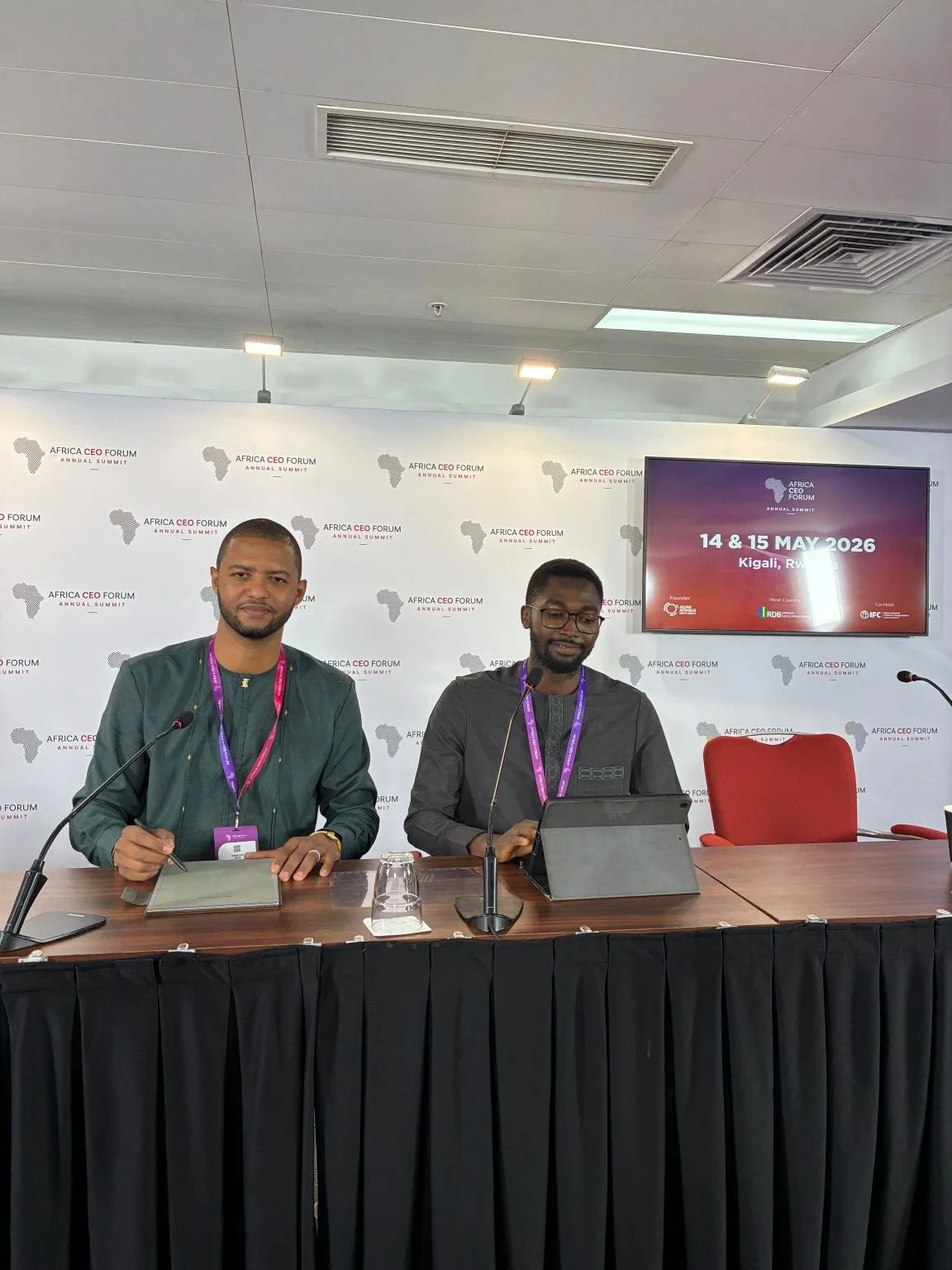
These are the questions that Askya Investment Partners and the Africa CEO Forum set out to answer. At the Forum's annual meeting in Kigali this May, we jointly released Telecoms Offshored — The Strategic Challenge of Satellite Internet for African Economies, drawing on interviews with more than 30 telecoms leaders, regulators and policymakers across the continent. The goal was not to argue against satellite internet — far from it. It was to make the case for getting the rules right, so Africa captures the full value of what this technology has to offer.
1. The real divide is affordability, not coverage
Understanding the opportunity clearly starts with getting the diagnosis right. Mobile broadband already reaches roughly 87% of Africa's population. The harder challenge is that only an estimated 38 to 43% of people are actually online, because for the majority of those within range of a signal, internet remains too expensive. Around 60% of the continent lives within network coverage but stays offline. This is what the report calls the usage gap, and closing it requires solutions that go beyond extending reach. Satellite internet plays an important role in connecting remote areas where terrestrial infrastructure will never be viable. But the bigger prize — bringing the hundreds of millions already within coverage online — depends on affordability, and that depends on regulation, investment and market structure as much as technology.
2. Not all telecoms operators play by the same rules — and that is a problem
Traditional telecoms operators in Africa carry a significant set of obligations. They pay licensing fees, contribute to Universal Service Funds that finance connectivity in underserved areas, invest in local infrastructure and pay taxes on the revenues they earn. These contributions add up. Africa's mobile sector generates more than $30 billion in taxes annually, supports around 8 million jobs and contributes roughly $220 billion to the continent's economy each year.
Satellite providers often do not face the same requirements. They can serve customers across a country while keeping their infrastructure, their data and much of their revenue offshore. The report calls these companies offshore telecoms operators, and the term is deliberate. The asymmetry this creates — same market, different rules — distorts competition and reduces the revenue that African governments can invest in their own digital infrastructure. That is not an argument against satellite providers being in the market. It is an argument for making sure the market works fairly.
3. There is a bigger question underneath all of this
Connectivity is not just a service. It is infrastructure — and whoever controls infrastructure holds significant power. Who decides how data generated in Africa is stored and used? Can African governments enforce their own laws on companies whose operations are based elsewhere? These are questions that go beyond the telecoms ministry. The report argues they need to be on the agenda of finance ministers, heads of state and security officials, not just regulators. Africa has an opportunity right now, while the satellite market is still forming, to set the terms. That opportunity is worth taking seriously.
4. The answer is not less satellite — it is better rules
The model the report advocates is a hybrid one, and it is already working in practice. Operators like MTN and Safaricom are integrating satellite connectivity for backhaul — using it to strengthen and extend their existing networks in remote areas rather than replacing them. That is the right approach: satellite and terrestrial infrastructure working together, each doing what it does best.
What makes that model sustainable is a level playing field. All operators — whether their infrastructure is on the ground or in orbit — should face comparable obligations around licensing, taxation and universal service. African countries also have more leverage than they often use when negotiating with global tech and telecoms providers, and stronger coordination across the continent would increase that leverage considerably.
As Babacar Seck, our Founder and Managing Partner, said in Kigali: "Africa is at a genuine inflection point in its digital journey. The path that best serves the continent is a hybrid one, where satellite internet complements terrestrial networks rather than displacing them, and where the rules ensure that value created stays on the continent through local jobs, technology transfer and tax revenues. The frameworks governments put in place today will determine whether that future is built on African capability or around it."